ABCDE assessment and systematic examination
Structured systematic assessment for early clinical years. Emphasis on pattern recognition, escalation thresholds, and documentation.
Postgraduate teaching at SHO, F2, and ACP levels. RCEM-aligned session design. Simulation teaching. Portfolio supervision and feedback.
40-slide teaching deck converted to a full interactive web module. 7 sections, expandable condition cards, clickable abdominal diagram, never-mix-up alerts, red flag highlights, and clinical decision flowcharts. RCEM aligned. Developed for Conquest Hospital SHO and F2 cohort.
NHS-compliant proforma with Levobupivacaine dosing, LAST safety checklist, EPMA fields, and NerveCentre documentation. Adopted at Conquest Hospital ED.
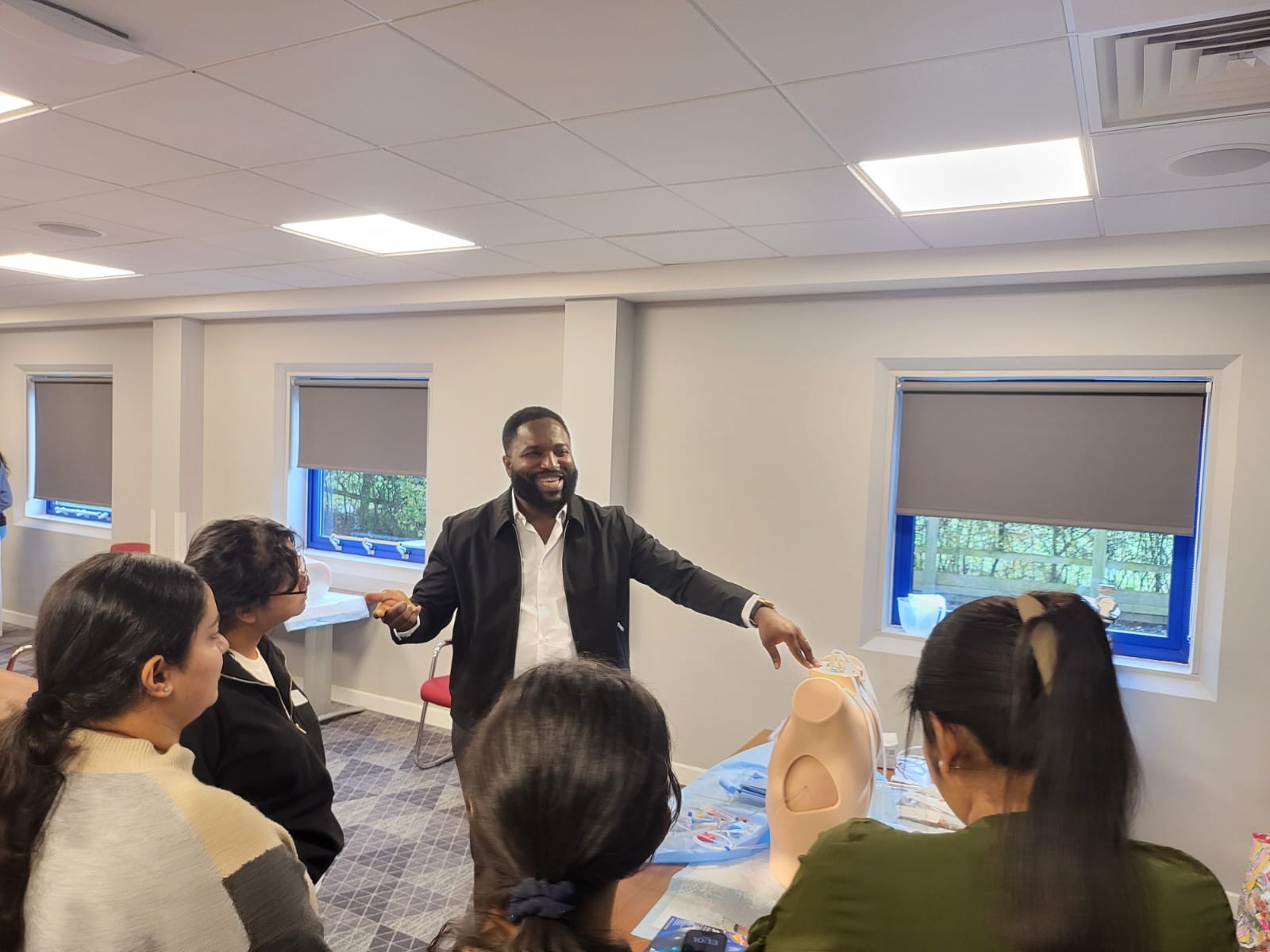
The best teaching in emergency medicine does not happen in lecture theatres. It happens at the whiteboard between resuscitations, at the bedside with a confused presentation.
My teaching is built around three things: a clinical hook that creates genuine uncertainty, a structured decision framework, and an honest debrief that acknowledges the limits of the evidence.
Trainees remember cases, contrasts, and the moments where the diagnosis was missed. They remember how you reasoned, not what you recited.
Teach through decisions, not facts
Clinical uncertainty is a skill to model
Feedback without a framework is noise
Five minutes at the whiteboard beats fifty in a lecture
Document what you teach — trainees need evidence
Show the limits of guidelines, then reason past them
Structured systematic assessment for early clinical years. Emphasis on pattern recognition, escalation thresholds, and documentation.
Team-based resuscitation training, RCUK 2021. Peri-arrest rhythms, drug doses, reversible causes, post-ROSC management.
Femoral, fascia iliaca, haematoma, wrist, digital blocks. Levobupivacaine dosing, LAST recognition, governance documentation.
STEMI equivalents, life-threatening arrhythmias, conduction abnormalities, and the bifascicular block.
Surgical and non-surgical abdomen in ED. Investigation priorities, red flags, escalation pathways.
PDSA methodology, SMART aims, governance requirements, and how to build QIPs that change practice.
Structured guidance, question banks, and mock exams for every stage of the RCEM examination journey.
Primary, Intermediate SBA, and OSCE preparation. 3,000 practice questions mapped to the RCEM curriculum with detailed explanations.
Exit-level SBA and clinical OSCE preparation. 3,000 advanced questions covering all 22 curriculum domains including leadership and governance.
100 Rapid Algorithms
Quick reference for 100 emergency conditions across 10 clinical systems.
View →High Yield Resources
Searchable clinical references — resuscitation, trauma, paediatrics, toxicology.
View →Research & QI Projects
NIHR studies, quality improvement work, and academic publications.
View →